
Chlorinated Rubber Road Marking Paint Reference Formulation
1. Reference Formulation for Chlorinated Rubber Road Marking paint
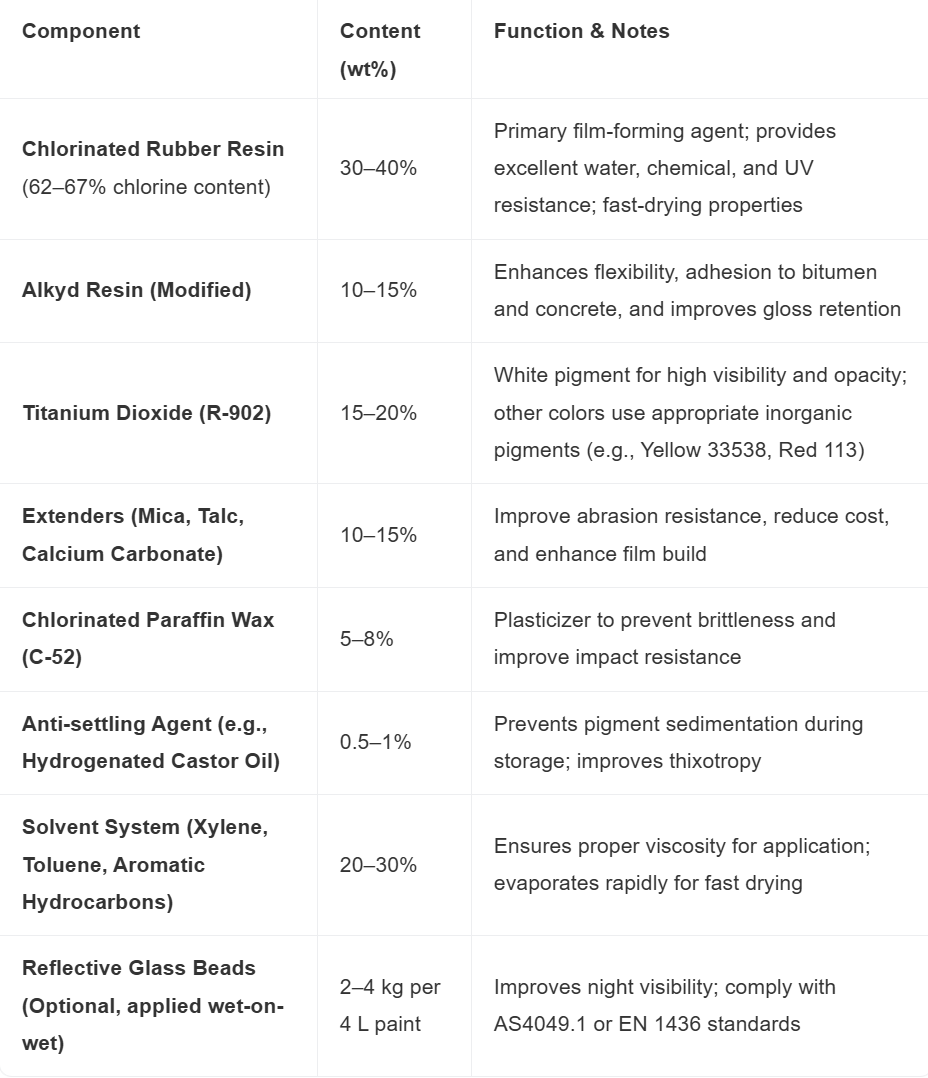
Note: This is a single-pack, physically drying system. No curing agent is required. Compatible with brush, roller, or line-marking machines.
2.Key Technical Properties
–Type: Solvent-borne, alkyd-modified chlorinated rubber road marking paint
–Finish: Flat to semi-gloss
–Drying Time:
-Surface dry: <10 minutes at 25°C
-No-pick-up time: <30 minutes
–Dry Film Thickness (DFT): 180–220 μm (high-build for durability)
–Coverage: ~3.2 m²/L at 180 μm DFT (theoretical)
–Color Options: White, Yellow, Red, Black, Blue, Green (custom shades available)
–Application Temperature: 10–45°C; substrate must be dry and free of moisture
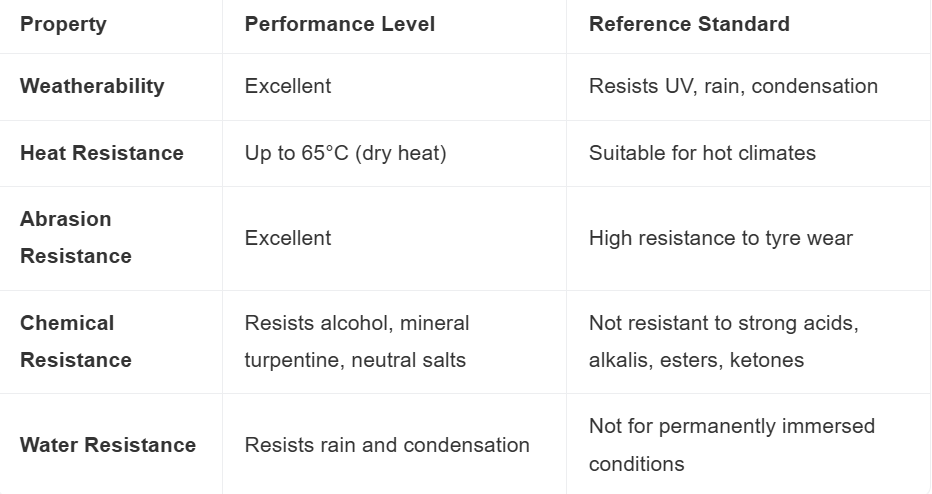
3.Performance Characteristics & Resistance
4.Application Guidelines
–Substrates: Concrete, bitumen, asphalt, aged blacktop, thermoplastic coverings
–Surface Preparation:
Clean, dry, free of oil, grease, dust, and loose particles
Use leaf blower or compressed air for final cleaning
–Application Methods:
Brush or roller for small areas
Line Lazer-type machine for large-scale marking
–Glass Bead Application:
Apply immediately after paint application at rate of 2 kg beads per 4 L paint
Ensure even dispersion for optimal retro-reflectivity
5.Compliance & Standards
This formulation meets or exceeds the following international and national specifications:
AS4049.1 – Australian Standard for road marking materials
NZTA M07 – New Zealand Transport Agency approval
AASHTO M 248 Type N/F – US highway marking performance standard
TTP 115-E Type III – US federal specification for traffic paint
GB/T 25263-2010 – Chinese national standard for chlorinated rubber coatings
ISO 12944-5 – International standard for corrosion protection systems
6.Safety & Handling Notes
Flammability: Highly flammable due to solvent content; store away from ignition sources
Ventilation: Use in well-ventilated areas; avoid inhalation of vapors
PPE Required: Gloves, goggles, respirator with organic vapor cartridges
Environmental Note: VOC content ~500–600 g/L; comply with local emissions regulations