
Chlorinated Rubber Anti-corrosive Coating Formulations
Chlorinated rubber anti-corrosive coatings are widely used for protecting steel structures in marine, industrial, and chemical environments due to their excellent resistance to water, acids, alkalis, and UV degradation. These coatings typically consist of chlorinated rubber resin, plasticizers, pigments, fillers, and solvents, with optional additives for enhanced performance.
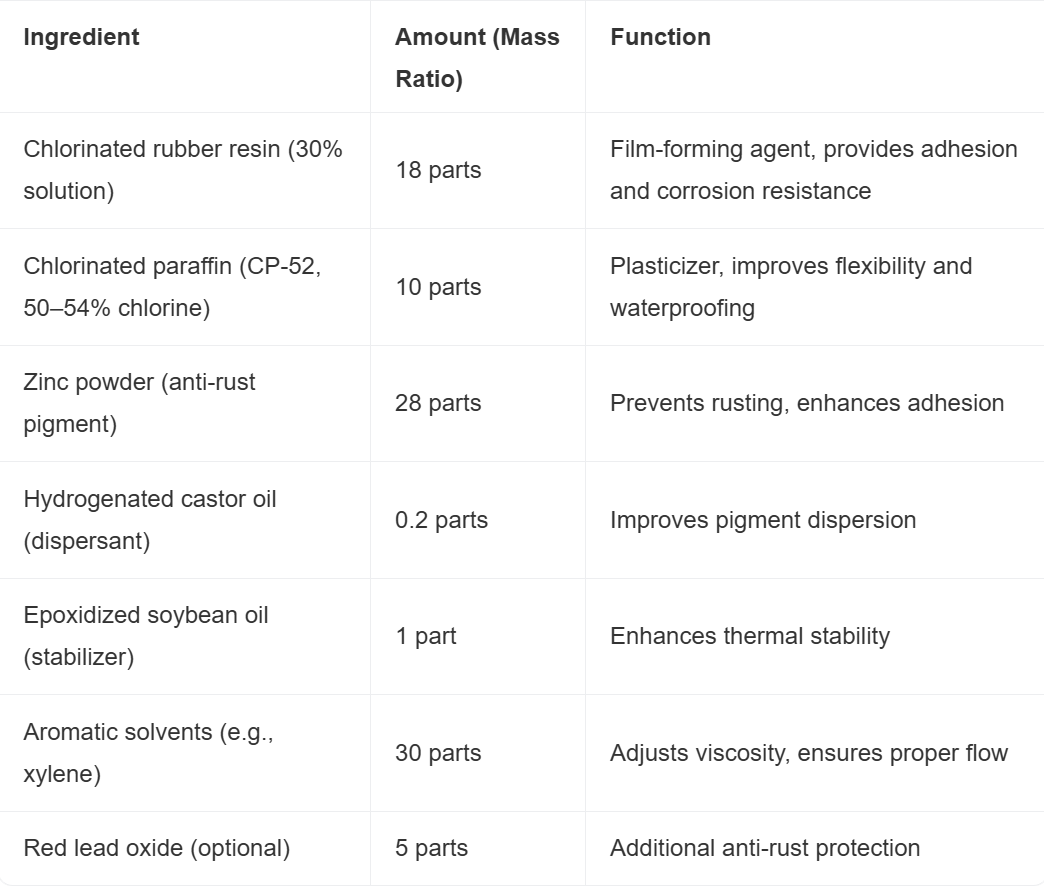
2. Typical Formulation for Chlorinated Rubber Anti-corrosive Primer Coat
Key Features: Single-component, fast-dry, strong adhesion, suitable for steel structures, pipelines, and storage tanks.
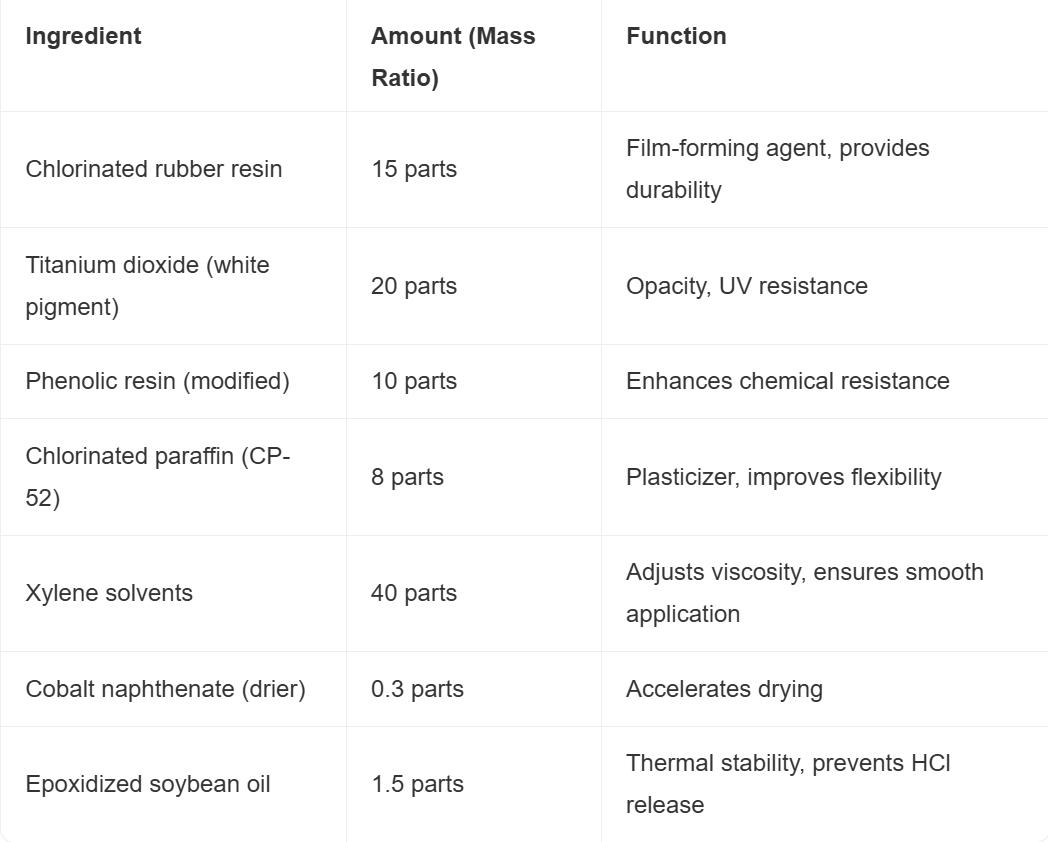
Key Features: High gloss, chemical resistance, UV stability, suitable for bridges, chemical equipment, and marine platforms.
Stirring: Mix thoroughly to ensure homogeneity and prevent sedimentation.
Dilution: Use only specialized chlorinated rubber diluents, up to 15% by volume. Avoid water or alcohol-based solvents.
Compatible Systems:
Primer: Can be applied over epoxy zinc-rich primers (e.g., H53-88) or other chlorinated rubber primers.
Top Coat: Usually applied as a single-component or paired with other chlorinated rubber top coats for a complete anti-corrosive system.
Drying Time: Surface dry ≤2 hours, full cure ≤24 hours (at 25°C).
Toxicity: Low toxicity, but prolonged inhalation of dust or vapors may irritate the respiratory system. Use N95 masks and gloves.
Environmental Compliance: Meets Chinese standards (e.g., GB 30981-2020) for industrial coatings, with VOC content <300 g/L.
Waste Disposal: Follow local regulations for hazardous waste collection (e.g., GB 18597-2007).
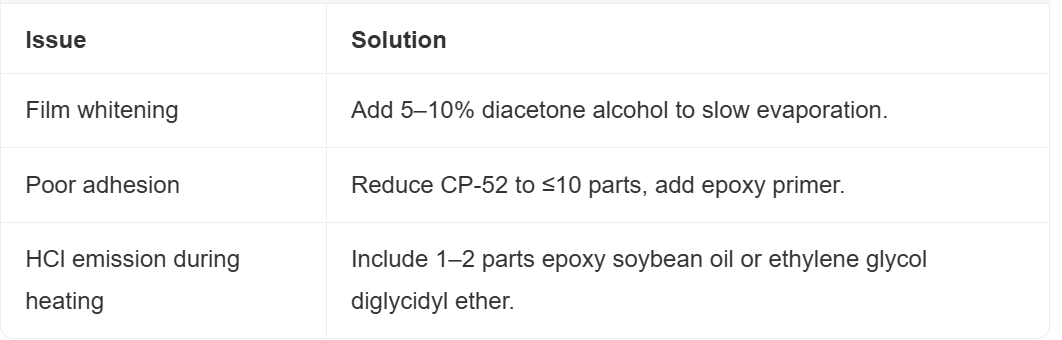
6. Common Issues and Solutions
Note: These formulations are based on industry standards (e.g., GB/T 25263-2010) and are suitable for temperate climates (e.g., northern China). Adjustments may be needed for extreme conditions.
Yeehope Chemicals adheres to the business philosophy of “integrity first, mutual benefit,” and the principle of “promoting development with efficiency, seeking survival with quality,” earning widespread praise from customers.
+86 18763609496
Building3,No.31 Longcheng Road, Shibei District,Qingdao City, Shandong Province,China.
Copyright © 2025 All Right Reserved YEEHOPE CHEMICALS