
Chlorinated Rubber Marine Paint Reference Formulation
1. Reference Formulation for Chlorinated Rubber Marine paint
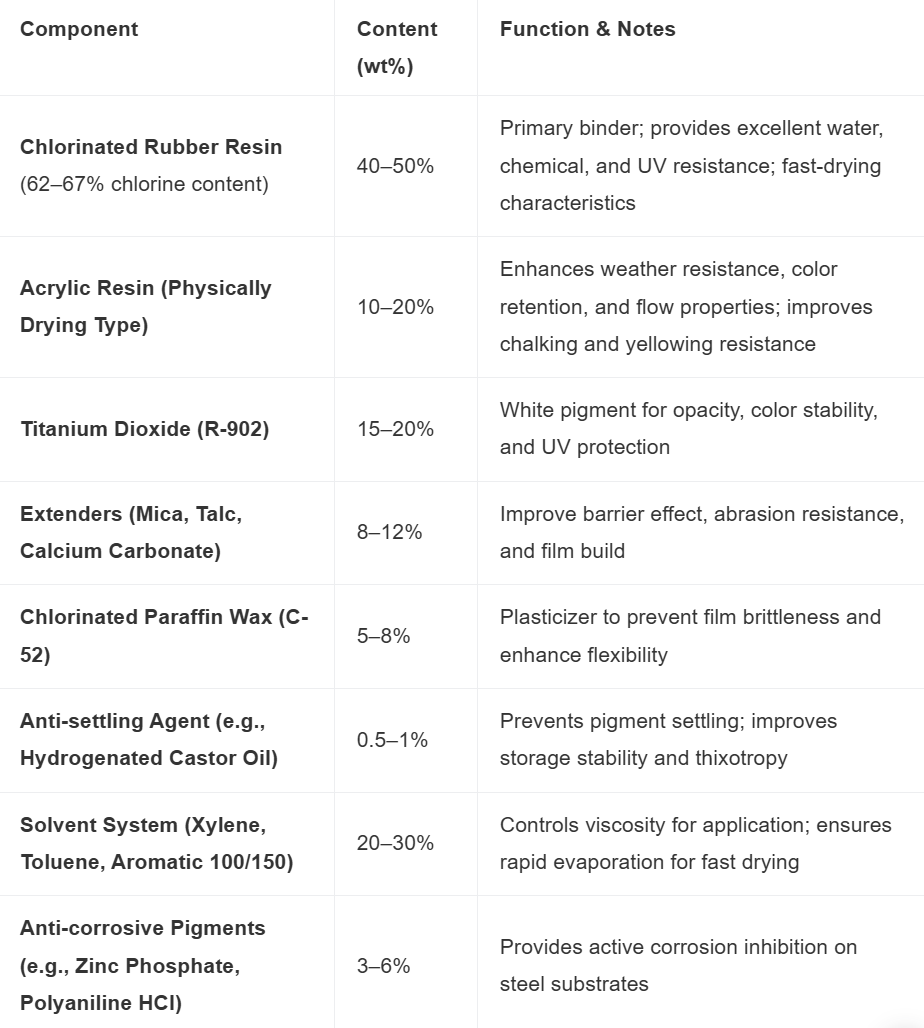
Note: This is a one-component (1K), solvent-borne, physically drying system. No curing agent is required. Not compatible with epoxy or water-based coatings.
2.Key Technical Specifications
–Type: Solvent-borne, modified chlorinated rubber topcoat
–Finish: Semi-gloss (20–65% gloss at 60°)
–Volume Solids: ~40% (varies by color)
–Density: 1.1–1.3 kg/L
–Drying Time (25°C):
Touch dry: 1–2 hours
Hard dry: 6–24 hours
Overcoating interval: Min. 4 hours, max. 7 days
–Dry Film Thickness (DFT): 40–60 μm (recommended)
–Theoretical Coverage: 8–10 m²/L at 40 μm DFT
–Application Methods: Brush, roller, airless spray (nozzle 0.017–0.023 inches, 18–25 MPa)
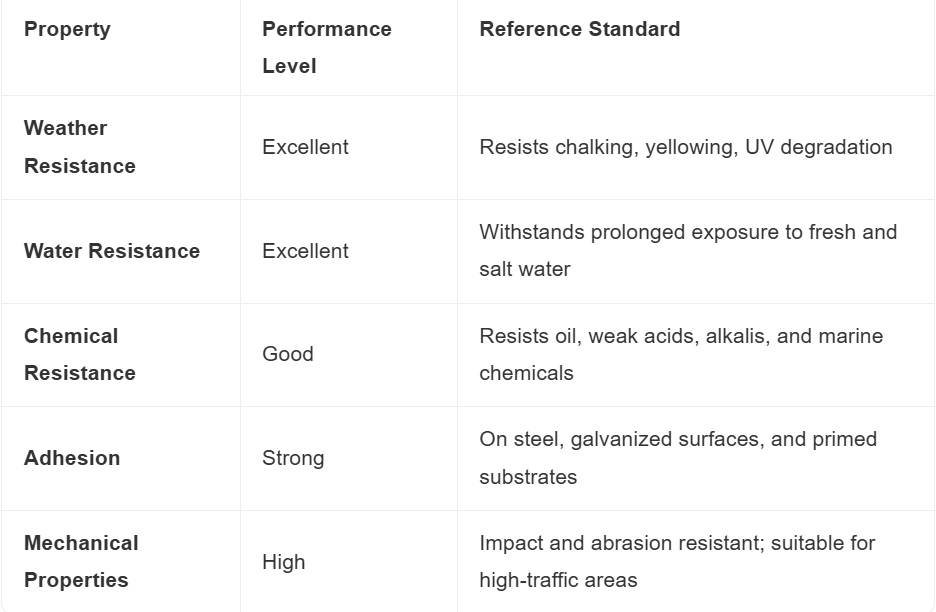
3.Performance Characteristics
4.Substrate & Application Guidelines
–Compatible Substrates:
Steel structures (interior/exterior)
Galvanized steel
Previously painted chlorinated rubber or alkyd coatings
–Surface Preparation:
Clean to ISO 8504 standard
Blast to Sa 2.5 (ISO 8501-1) for bare steel; power tool cleaning to St 2 for maintenance
Remove oil, grease, moisture, and loose particles
–Environmental Conditions:
Temperature: 10–40°C
Relative humidity: ≤85%
Substrate temperature > dew point +3°C
–Priming Recommendation:
Use chlorinated rubber primer, epoxy zinc-rich, or bituminous undercoat for optimal protection
Compliance & Standards
This formulation complies with:
ISO 12944-5: Corrosion protection of steel structures — Protective paint systems
GB/T 25263-2010: Chinese national standard for chlorinated rubber coatings
IMO A.678(16): Guidelines for performance of anti-corrosive paints for ships
ASTM D4541: Pull-off adhesion test method
Safety & Handling
Flammability: Highly flammable (flash point ~31–40°C)
VOC Content: ~550–650 g/L; comply with local regulations
PPE Required: Respirator (organic vapor), gloves, goggles, protective clothing
Storage: 12 months in sealed containers at 5–30°C