
Chlorinated Rubber Swimming Pool Coating Reference Formulation
1. Reference Formulation for Chlorinated Rubber Swimming Pool Coating
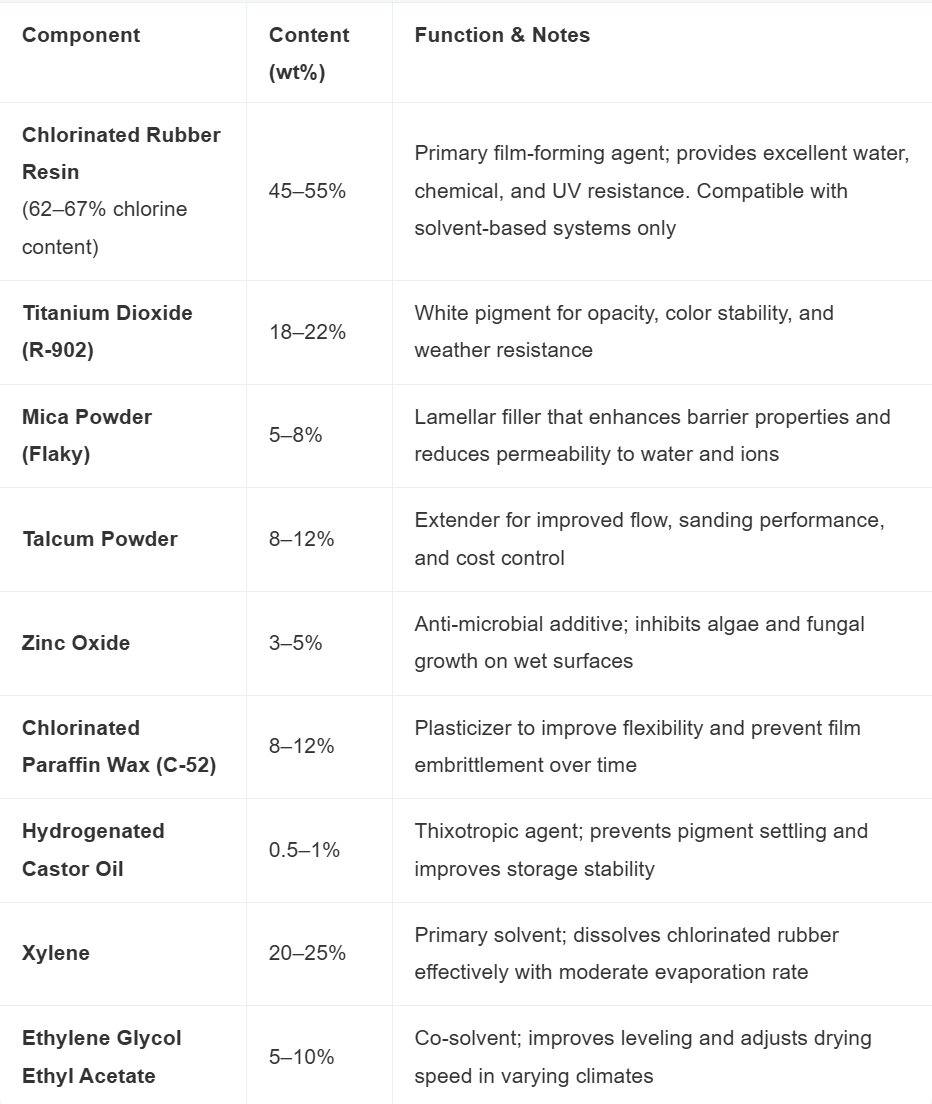
Note: This is a one-component (1K), physically drying system. No curing agent is required. Mixing with epoxy or water-based resins is strictly prohibited due to incompatibility.
2.Key Technical Specifications
–Type: Solvent-borne, single-pack coating
–Finish: Semi-gloss (30–40 GU @ 60°)
–Volume Solids: ~35% (varies by color)
–Dry Film Thickness (DFT): 60–80 μm (recommended for full protection)
–Theoretical Coverage: 120–160 g/m² at 35 μm DFT
–Curing Time:
Touch dry: 1–2 hours at 25°C
Recoat interval: 4–8 hours
Full service cure: 7–10 days before water filling
–Application Methods: Brush, roller, or conventional spray (avoid high-pressure airless due to viscosity)
3.Substrate & Application Guidelines
–Compatible Substrates:
Concrete, Marcite, Gunite, and previously painted chlorinated rubber surfaces
–Incompatible Surfaces:
Epoxy-coated, acrylic-painted, metal, fiberglass, vinyl-lined, or heated pools (>35°C)
–Surface Preparation:
Clean thoroughly with degreaser (e.g., citrus-based cleaner)
Repair cracks with polymer-modified cement
Dry for at least 7 days; moisture content <8%
Sand or blast to ISO G profile (100–150 μm roughness) for mechanical adhesion
–Environmental Conditions:
Temperature: 10–35°C
Relative humidity: ≤85%
Avoid direct sunlight and rain within 6 hours of application
4.Safety & Compliance Notes
Flammability: Highly flammable due to solvent content (VOC ≈ 565 g/L)
Ventilation: Mandatory during application and curing
PPE Required: Respirator (organic vapor), gloves, goggles, and protective clothing
5.Standards Met:
GB/T 25263-2010 (China National Standard for Chlorinated Rubber Coatings)
ISO 12944-5 (Corrosion protection of steel structures)
Complies with OTC VOC regulations in low-emission zones when modified
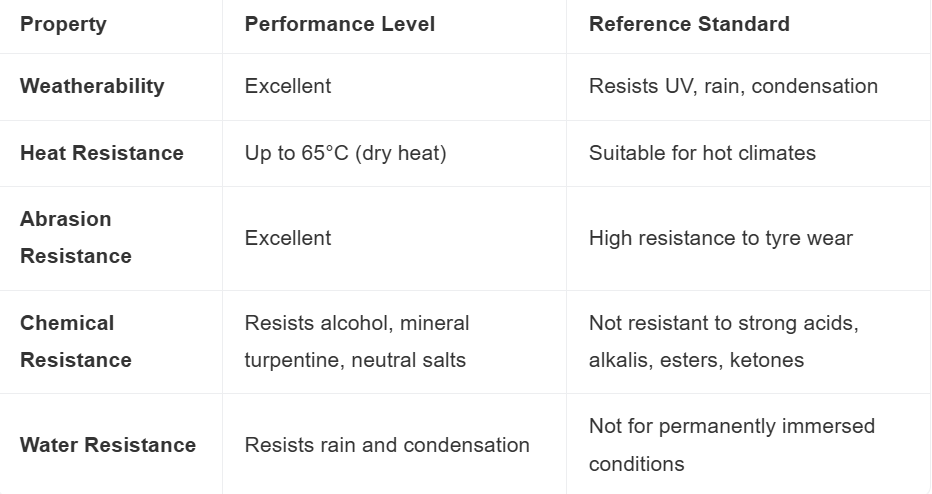
3.Performance Characteristics & Resistance
4.Application Guidelines
–Substrates: Concrete, bitumen, asphalt, aged blacktop, thermoplastic coverings
–Surface Preparation:
Clean, dry, free of oil, grease, dust, and loose particles
Use leaf blower or compressed air for final cleaning
–Application Methods:
Brush or roller for small areas
Line Lazer-type machine for large-scale marking
–Glass Bead Application:
Apply immediately after paint application at rate of 2 kg beads per 4 L paint
Ensure even dispersion for optimal retro-reflectivity
5.Compliance & Standards
This formulation meets or exceeds the following international and national specifications:
AS4049.1 – Australian Standard for road marking materials
NZTA M07 – New Zealand Transport Agency approval
AASHTO M 248 Type N/F – US highway marking performance standard
TTP 115-E Type III – US federal specification for traffic paint
GB/T 25263-2010 – Chinese national standard for chlorinated rubber coatings
ISO 12944-5 – International standard for corrosion protection systems
6.Safety & Handling Notes
Flammability: Highly flammable due to solvent content; store away from ignition sources
Ventilation: Use in well-ventilated areas; avoid inhalation of vapors
PPE Required: Gloves, goggles, respirator with organic vapor cartridges
Environmental Note: VOC content ~500–600 g/L; comply with local emissions regulations